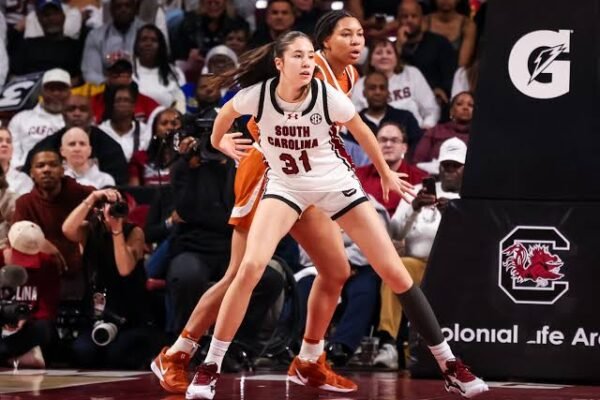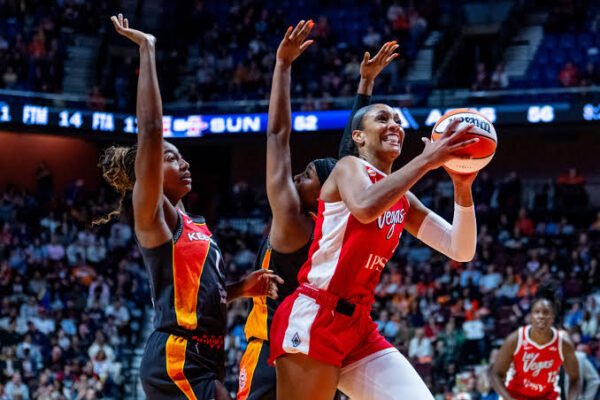
South Carolina just lost Raven Johnson and Ta’Niya Latson to the WNBA. Maddie McDaniel is stepping away from the program. And the most obvious returning breakout guard averaged just 1.3 assists per game last season. So here’s the question every Gamecocks fan should be asking: does Dawn Staley need to find another traditional point guard, or does she already have something far more dangerous sitting on her roster?
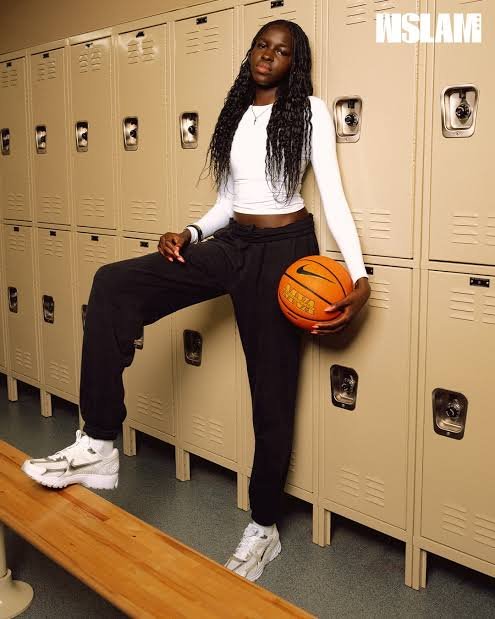
Her name is Agot Makeer, a 6-foot-1 guard who doesn’t need to replace Raven Johnson. She needs to become a problem opposing defenses simply can’t solve with one matchup.
A Point Guard and a Point Wing Are Not the Same Thing
Let’s be clear: as of now, South Carolina hasn’t announced any official position change for Makeer. This is projection, not confirmed news. But it’s a projection built on necessity. Raven Johnson organized the offense, advanced the ball, controlled tempo, and absorbed pressure. Latson provided a second experienced creator. Both are gone, and McDaniel is out of the picture too.
Staley now has a choice: hand the entire offense to one new lead guard, or spread creation across Makeer, Tessa Johnson, Jordan Lee, and incoming freshman Jerzy Robinson. A full-time point guard has to process all five defenders on every single possession. A point wing doesn’t. Give Makeer more selective duties instead — advancing the ball off a rebound, triggering early offense, occasionally running a handoff — and she’s making one or two clean reads instead of running the whole show. That’s a role built around her strengths, not a burden placed on top of them.
Why Her Size Changes Everything
South Carolina lists Makeer at 6-foot-1; FIBA has her closer to 6-foot-2. Either way, she’s taller than the guards who typically pressure South Carolina’s backcourt — and that changes the geometry of the game. She can see over traps, deliver passes into the high post without forcing an angle, and shield the ball with her frame when defenders crowd her. When teams switch a smaller defender onto her, she doesn’t need to reset — she can just attack the mismatch immediately.
The Assist Numbers Don’t Tell the Whole Story
Critics will point to her freshman stat line fast: 7.3 points, 3.3 rebounds, just 1.3 assists. Those aren’t point guard numbers, and nobody’s pretending they are. But assists only credit the final pass — not the advantage created before it. When Makeer beats her defender and forces a rotation that leads to an open shot two passes later, she gets zero credit on the stat sheet despite creating the entire sequence.
Her track record backs up the potential: 2.8 assists per game in her final season at Crestwood Prep, 2.8 at Montverde Academy, and steady numbers running Canada’s offense internationally. FIBA even classified her as a shooting guard — someone with real perimeter passing instincts who simply hasn’t been asked to run point full-time yet.
What the Ideal Possession Looks Like
Picture this: another guard brings the ball up, a screen shifts the defense, and the ball reverses to Makeer on the wing. Now she’s attacking one recovering defender instead of five set defenders. From there she has options — beat the closeout and finish, drive and dump to the post, kick to a shooter, or flow into a handoff. Her scoring ability is what makes all of this work. Defenders can’t sag off her, which opens everything else up.
Her NCAA Tournament run backs this up — 14.0 points per game across six tournament contests, 55% shooting, double figures in every game, and 13 steals tied for the team lead. When the pressure rose, she got better, not worse.
Protecting the Freshmen, Confusing the Defense
Spreading creation across multiple players also protects Jerzy Robinson, an incoming freshman who shouldn’t have to shoulder Raven Johnson’s entire organizational load on day one. It keeps Tessa Johnson dangerous off the ball. And it makes South Carolina far less predictable — opponents can’t just pressure one player and shut down the whole offense.
The Catch
None of this works if Makeer’s handle can’t survive SEC-level pressure. She has to learn to identify the low defender before she drives, not after. If she drives first and reads second, she’ll run into traps and charges. If she reads first, the game slows down and the options open up.
The Bottom Line
Makeer probably won’t lead South Carolina in assists, and she likely won’t be named the new point guard. But by March, she could be the player Dawn Staley trusts most to break pressure and rescue stalled possessions. Once a 6-foot-1 scorer becomes a reliable passer, defenses face an impossible choice — and that’s when Makeer stops being a breakout scorer and becomes the player who reshapes South Carolina’s entire offense.