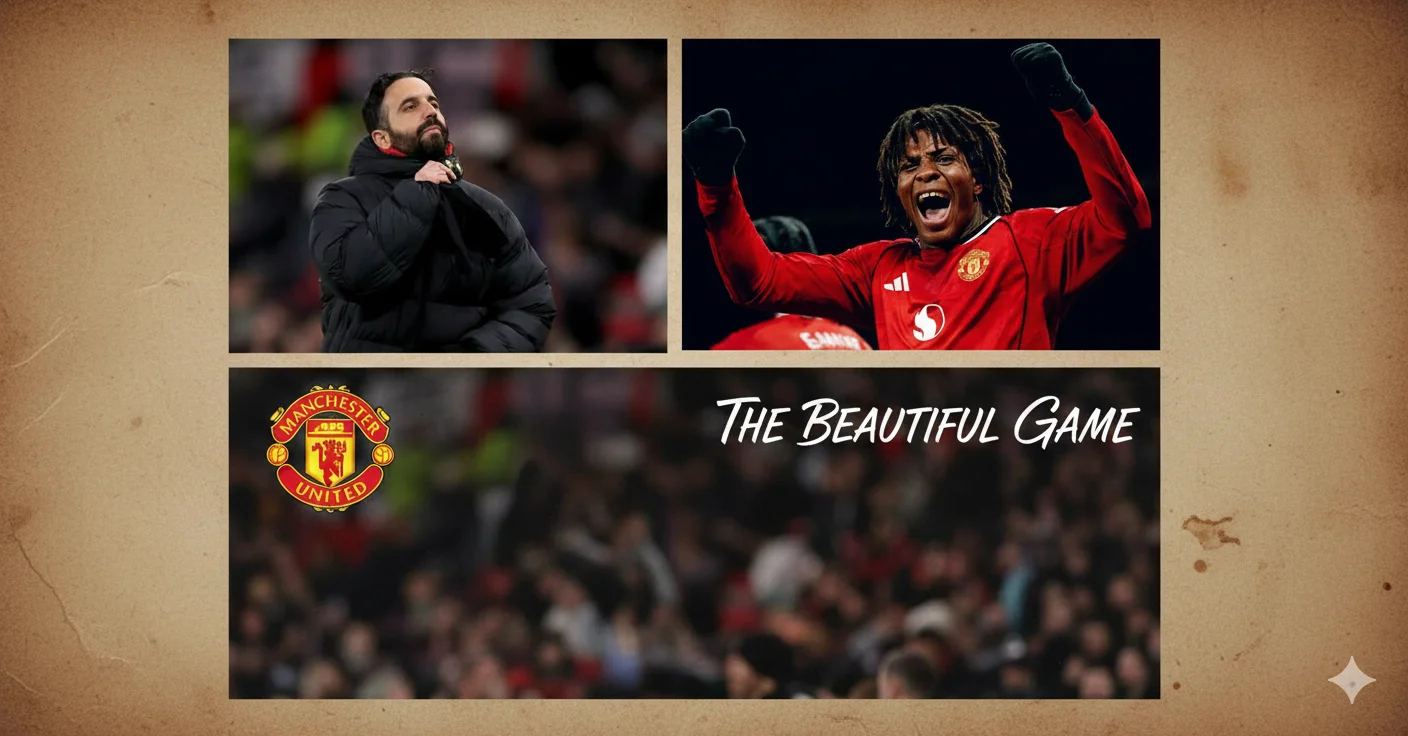
Ruben Amorim explains Manchester United formation change with the calm certainty of a manager who knows exactly when to bend—and when refusing to bend would snap everything in half.
Old Trafford was tense long before the final whistle against Newcastle United. The December air hung heavy, the crowd restless, the margin thin. When United dropped deeper late on, defenders packed tight and midfielders doubling back, it felt less like a tactical experiment and more like a test of nerve. Amorim passed it. Just.
Amorim Draws a Line in the Sand
Ruben Amorim has never been shy about conviction. Earlier in his managerial rise, he famously joked that not even the Pope could persuade him to abandon his preferred system—a back three with aggressive wing-backs stretching the pitch. That quote still follows him around, resurfacing whenever United wobble or concede space down the flanks.
You can revisit that moment of stubborn clarity via the BBC’s earlier coverage here:
👉 https://www.bbc.com/sport/football/articles/cyv6n81q009o
But football, like leadership, is about timing. And Amorim insists this moment—now—was the right one.
“If I changed because of the pressure,” he said, voice flat but firm, “that would be the end for me.”
Not the end of a season. The end of authority.
Why Newcastle Was Different
Against Newcastle United, Amorim finally stepped away from the back three. Out went the wing-backs. In came a traditional back four, shielded by two holding midfielders. On paper, it looked pragmatic. On the pitch, it was survival football late on—by Amorim’s own admission, a back six as United clung to a narrow lead.
The reward?
- A 1–0 victory
- Only their second clean sheet of the season
- A rare sense of defensive control in the dying minutes
It wasn’t pretty. But it was deliberate.
And crucially, Amorim insists it wasn’t reactive.
“You Change When You’re Playing Well”
This is where Amorim’s philosophy sharpens. He believes tactical flexibility only works after a team understands its core identity. Change too early, and players assume panic. Change under pressure, and authority leaks out of the dressing room.
“When I came here last season,” Amorim explained, “I understood maybe I didn’t have the players to play well in that system. But it was the beginning of a process.”
That process, he says, was about imprinting habits—how to press, when to drop, how to build under stress. Only once those habits settled could he afford to switch shapes without losing trust.
“When you [the media] talk about changing the system all the time,” he added, “I cannot change because the players will understand I’m changing because of you.”
In elite football, perception is reality.
Results vs Reality
Here’s the uncomfortable truth: United had won just two of their previous eight games before Newcastle. From the outside, claims of “playing well” felt optimistic at best.
But context matters.
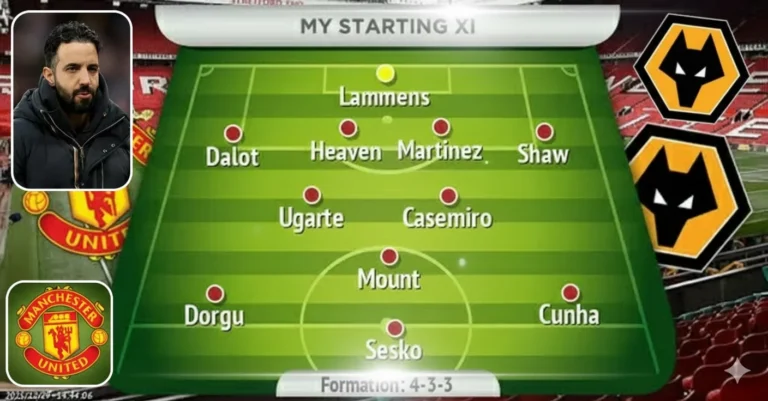
Amorim is navigating a brutally thin squad. Injuries have stripped away options, rhythm, and continuity. Seven senior players were already ruled out ahead of the upcoming home match against Wolverhampton Wanderers—a Wolves side still searching for their first win.
That list may grow.
Injury Crisis Shapes the Tactical Shift
Mason Mount’s hamstring issue forced him off at half-time against Newcastle, placing a serious doubt over his availability. Captain Bruno Fernandes is already sidelined, despite lobbying hard for an early return after picking up his injury in the defeat at Aston Villa on 21 December.
Amorim isn’t budging.
“No chance,” he said. “No chance he’s going to play against Wolves. You can write that.”
It was said with a half-smile, but the message was absolute.
Also missing or racing the clock:
- Kobbie Mainoo
- Matthijs de Ligt
- Harry Maguire
And by the end of January, United will regain Noussair Mazraoui, Amad Diallo, and Bryan Mbeumo following their Africa Cup of Nations commitments—a boost that could permanently alter Amorim’s tactical palette.
Bruno Fernandes: Captain Even When He’s Not Playing
If leadership had a physical presence, Bruno Fernandes would still be starting every match.
While most injured players retreat to private boxes, Fernandes stationed himself near the tunnel before kick-off against Newcastle, eyes locked on warm-ups, barking instructions, absorbing everything.
“The guy is a leader,” Amorim said. “He cannot be that guy that when he is not playing, he’s not talking.”
Amorim praised Fernandes’ intensity—even poking fun at his animated arm movements—while making it clear his influence extends beyond the pitch.
“I don’t know if he wants my job or not,” Amorim joked, “but he’s a leader.”
In a season defined by absences, that presence matters.
A Glimpse of United’s Tactical Future
Perhaps the most revealing line came quietly, almost casually:
“When all the players return, we are not going to play with three defenders all the time.”
That’s not a promise. It’s a warning—to opponents and purists alike.
Amorim isn’t abandoning his principles. He’s expanding them.
United’s future, if this plan holds, won’t be locked into one shape or philosophy. It will be flexible, situational, and—if Amorim has his way—immune to outside noise.
What This Means Going Forward
- Back three remains part of United’s identity
- Back four is now a credible, trusted alternative
- Tactical switches will be strategic, not reactive
- Injured leaders like Fernandes remain central off the pitch
This wasn’t surrender. It was evolution.
And in modern football, evolution is survival.
Ruben Amorim explains Manchester United formation change not as a concession to critics, but as proof that authority isn’t about refusing to adapt—it’s about knowing exactly when to do it.
About the Author