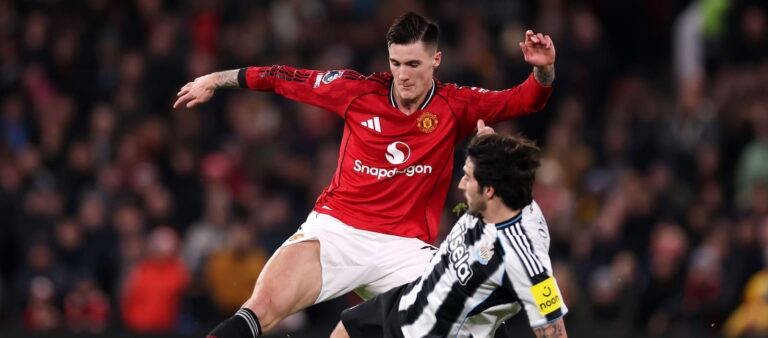
Newcastle United vs Manchester United: How Carrick Counters Howe’s High PressWhen Newcastle United face Manchester United, the tactical spotlight often falls on the touchline battle between Eddie Howe and Michael Carrick. With Howe’s side renowned for their aggressive high press, Carrick’s challenge is clear: disrupt the rhythm, break the lines, and turn pressure into opportunity.Understanding Howe’s High PressUnder Howe, Newcastle have become one of the most intense pressing sides in the league. Their front three initiate the press, cutting off passing lanes to the full-backs while forcing play inside. The midfield squeezes high, compressing space and targeting turnovers in advanced areas.The aim is simple — win the ball close to goal and attack before the opposition can reset. Newcastle’s backline also pushes up, keeping the team compact and suffocating build-up play.Carrick’s Calm in PossessionCarrick’s approach at Manchester United is rooted in composure and structure. Rather than engaging in rushed, hopeful clearances, he encourages controlled build-up from the back. Against Newcastle’s press, this becomes crucial.United’s centre-backs are instructed to split wide, creating passing angles, while the goalkeeper acts as an extra outfield option. By inviting the press, Carrick aims to draw Newcastle forward, creating exploitable space behind their midfield line.Quick one-touch combinations in tight areas can break the first wave of pressure. Once that line is beaten, United can accelerate into open grass — the very space Newcastle’s high defensive line leaves exposed.Midfield Rotations and OverloadsCarrick often deploys a fluid midfield structure to counter pressing sides. One midfielder may drop deep to form a temporary back three, allowing full-backs to push higher. This movement disrupts Newcastle’s pressing triggers and forces hesitation.Overloads in central areas can also stretch Howe’s compact shape. By crowding midfield zones with numerical superiority, United can progress the ball through short, sharp passes rather than long balls.The key lies in timing. A single vertical pass played at the right moment can bypass multiple Newcastle players and ignite a counter-attack.Exploiting the Space BehindHowe’s philosophy demands a high defensive line to support the press. That leaves space in behind — particularly in wide channels.Carrick’s countermeasure may involve quick diagonal switches and early balls over the top. Fast wingers making runs beyond the defensive line can turn Newcastle’s aggression into vulnerability.Transitions will be decisive. If United can break the press cleanly, they can attack a stretched and unbalanced Newcastle side.Discipline Without the BallWhile much focus is on build-up play, Carrick’s defensive organisation is equally important. Newcastle thrive on chaos; denying them transitional moments reduces their threat.A compact mid-block, disciplined spacing, and quick recovery runs can frustrate Howe’s system. Instead of engaging in an end-to-end contest, Carrick may prefer controlled phases, slowing the tempo and limiting emotional momentum at St James’ Park.The Tactical Chess MatchThis fixture is more than a battle of form — it’s a clash of ideologies. Howe’s intensity versus Carrick’s composure. High-octane pressing against patient construction.If Manchester United can remain calm under pressure and execute Carrick’s structured build-up, they have the tools to dismantle Newcastle’s press. But if they falter in possession, Howe’s side will be ready to pounce.In matches like this, control is everything — and Carrick’s ability to manage it could define the outcome.
About the Author