2026 Women’s March Madness championship prediction based on advanced stats begins with a simple truth: winning the NCAA title in women’s college basketball takes far more than star power. It takes relentless rebounding, suffocating defense, elite efficiency—and just enough luck when the bracket tightens and the arena noise reaches a roar.
Every March, fans debate contenders based on highlight plays and big wins. But history paints a clearer picture. The numbers—cold, consistent, and often unforgiving—have quietly predicted champions for more than a decade.
When the 2026 tournament tips off, the stats suggest only a handful of teams truly fit the profile of a national champion.
The Numbers That Predict Champions
To identify real title threats, three statistical benchmarks stand out.
According to data from Her Hoop Stats (https://herhoopstats.com/), nearly every NCAA champion since 2010 has met these standards:
- Top 4 in Her Hoop Stats Rating (HHS Rating) — a measure of scoring margin per 100 possessions against an average team
- Top 30 nationally in rebounds per game
- Top 20 in opponent effective field-goal percentage (EFG%), a key defensive metric
There have been rare exceptions, but the pattern is strikingly consistent.
One of the biggest statistical outliers came in 2011 when Texas A&M won the title under coach Gary Blair despite mediocre rebounding and defensive metrics. Another was Notre Dame’s 2018 championship run.
But those seasons are the exceptions. Most champions dominate the glass, defend efficiently, and overwhelm opponents statistically.
So which teams actually match that blueprint in 2026?
Talented—but Missing the Championship Profile
Several big-name programs pass the eye test but fall short statistically.
Among them:
- Michigan
- Vanderbilt
- Iowa
- Texas
- Duke
These teams have elite players and strong résumés. But the underlying metrics reveal cracks.
Michigan ranks sixth in HHS Rating, which is strong. Yet the Wolverines sit 42nd in rebounding and a troubling 209th in EFG defense.
Iowa, despite its explosive offense, has similar issues. The Hawkeyes rank 10th in HHS Rating, but their rebounding (90th) and defensive efficiency (244th in EFG defense) fall well outside the championship range.
Meanwhile Vanderbilt, powered by Player of the Year candidate Mikayla Blakes and coach Shea Ralph, ranks seventh in HHS Rating. But the Commodores struggle badly in the two other areas: 212th in rebounding and 273rd in EFG defense.
Those defensive gaps matter in March. When the pace slows and every possession feels heavier, weak rebounding and porous defense can end a season quickly.
Two other contenders come closer.
Texas sits inside the top four in HHS Rating, but the Longhorns rank 91st in rebounding and 57th in EFG defense—a combination that historically hasn’t produced champions.
Duke, meanwhile, boasts one of the nation’s strongest defenses with an EFG defense ranking of 17th, but the Blue Devils are only 43rd in rebounding and ninth in HHS Rating.
In short: good teams, dangerous teams—but statistically flawed contenders.
The Near-Perfect Contenders
Three teams come much closer to the historical championship formula:
- Oklahoma
- TCU
- LSU
Each excels in rebounding and defensive efficiency.
The most imposing of the trio is , coached by .
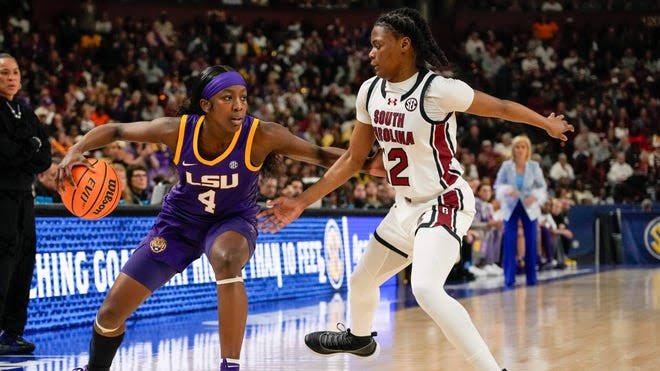
LSU dominates the glass, ranking second nationally in rebounding with 48.9 boards per game. Their defense is equally punishing, sitting sixth in EFG defense, allowing opponents to shoot just 39.8% effectively.
That combination alone makes the Tigers dangerous in tournament play.
TCU presents a different kind of threat. The Horned Frogs lead the nation in EFG defense (37.8%), suffocating opposing offenses night after night. They also rank 27th in rebounding, enough to meet the championship threshold.
Oklahoma may be the most balanced of the three. The Sooners are third nationally in rebounding (48.7 per game) and rank eighth in EFG defense, a defensive profile that has historically fueled deep tournament runs.
The one problem? None of these teams sit inside the top four in HHS Rating, a metric that has predicted almost every champion of the past 15 years.
The Powerhouses: UConn and UCLA
Two programs have dominated the statistical conversation all season.
The and rank first and second in HHS Rating, marking them as the most efficient teams in the country.
For UConn, the offense is electric and the defense remains disciplined. The roster features elite playmakers like and rising star , giving the Huskies the kind of talent that thrives under tournament pressure.
Yet one statistical weakness lingers.
UConn ranks 183rd nationally in rebounds per game (36.7)—far outside the historical championship range.
The Huskies overcame a similar issue during their 2025 title run, but doing it twice would be rare.
UCLA’s profile looks slightly stronger.
The Bruins dominate the boards, ranking eighth nationally with 43 rebounds per game. Anchoring the paint is towering center , whose presence changes both rebounding and rim protection.
But UCLA’s weakness appears on the defensive efficiency side. The Bruins sit 26th in EFG defense, just outside the top-20 threshold that nearly every champion has met.
Still, both teams remain legitimate favorites. Elite efficiency alone can carry a team deep into March.
The Team That Checks Every Box
Only one program in the country currently meets all three championship criteria.
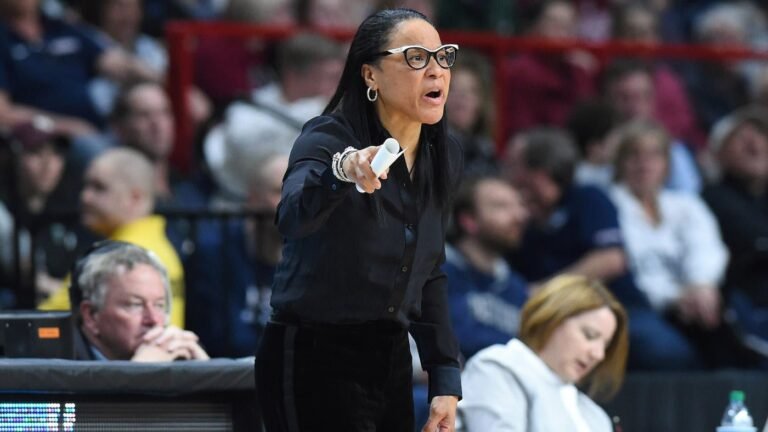
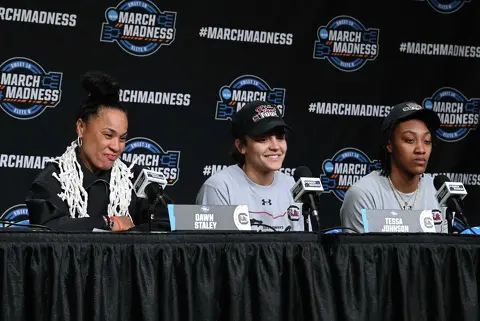
The , coached by .
Statistically, the Gamecocks are almost flawless.
- 3rd in HHS Rating
- 12th in rebounds per game (42.6)
- 3rd in opponent EFG% (38.6%)
That combination—elite efficiency, dominant rebounding, and suffocating defense—is the exact formula that has defined most champions of the past decade.
South Carolina already owns a championship pedigree, and another title would mark Staley’s fourth national championship.
But even perfect metrics don’t guarantee an easy path.
To reach the trophy, the Gamecocks may have to survive:
- A high-powered UConn offense
- A towering UCLA frontcourt led by Betts
- A bruising rebounding battle against LSU
And that’s before the chaos of March begins.
Why March Madness Still Defies Prediction
Advanced stats can narrow the field, but they can’t predict everything.
A hot shooting night, a breakout performance from a role player, or a late defensive stop can flip a tournament game instantly. That’s why the NCAA tournament remains one of the most thrilling spectacles in sports.
Fans can track the official tournament schedule and updates through the NCAA Women’s Basketball Championship page:
https://www.ncaa.com/sports/basketball-women/d1
When the Final Four arrives in Phoenix, the matchups may look exactly like the numbers predicted—or completely different.
But if history holds true, the champion will almost certainly be a team that dominates efficiency, rebounding, and defense.
And that’s why the smartest 2026 Women’s March Madness championship prediction based on advanced stats still points squarely toward South Carolina. 🏀🔥
About the Author